
For the modern Enterprise CMO, influencer marketing has long felt like a high-stakes gamble. You approve a significant budget for a "top-tier" creator, cross your fingers for a spike in sales, and instead receive a report filled with vanity metrics: likes, comments, and "estimated" reach. The core frustration is the Lack of predictable ROI and the sheer impossibility of scaling manual efforts. When every collaboration requires weeks of manual negotiation and fragmented data, growth becomes a bottleneck rather than a lever.
Context or Strategy
In markets like Uzbekistan and Kazakhstan, the digital landscape is rapidly maturing. While global platforms are standard, the "Strategic Gap" remains wide. Traditional agencies rely on "gut feeling" rather than hard data. Transitioning to an affiliate-led model—where creators are incentivized by sales (CPA) rather than flat fees—is the only way to achieve Fortune 500-level efficiency at scale.
Practical Framework: Building Your Influence Engine
To move away from fragmented "shoutouts," CMOs must implement a systemic approach to creator management.
Moving from Manual Outreach to Agentic Negotiation
Manual negotiations are the death of scalability. In the 2.0 era, AI-driven agents handle the heavy lifting.
Autonomous Communication
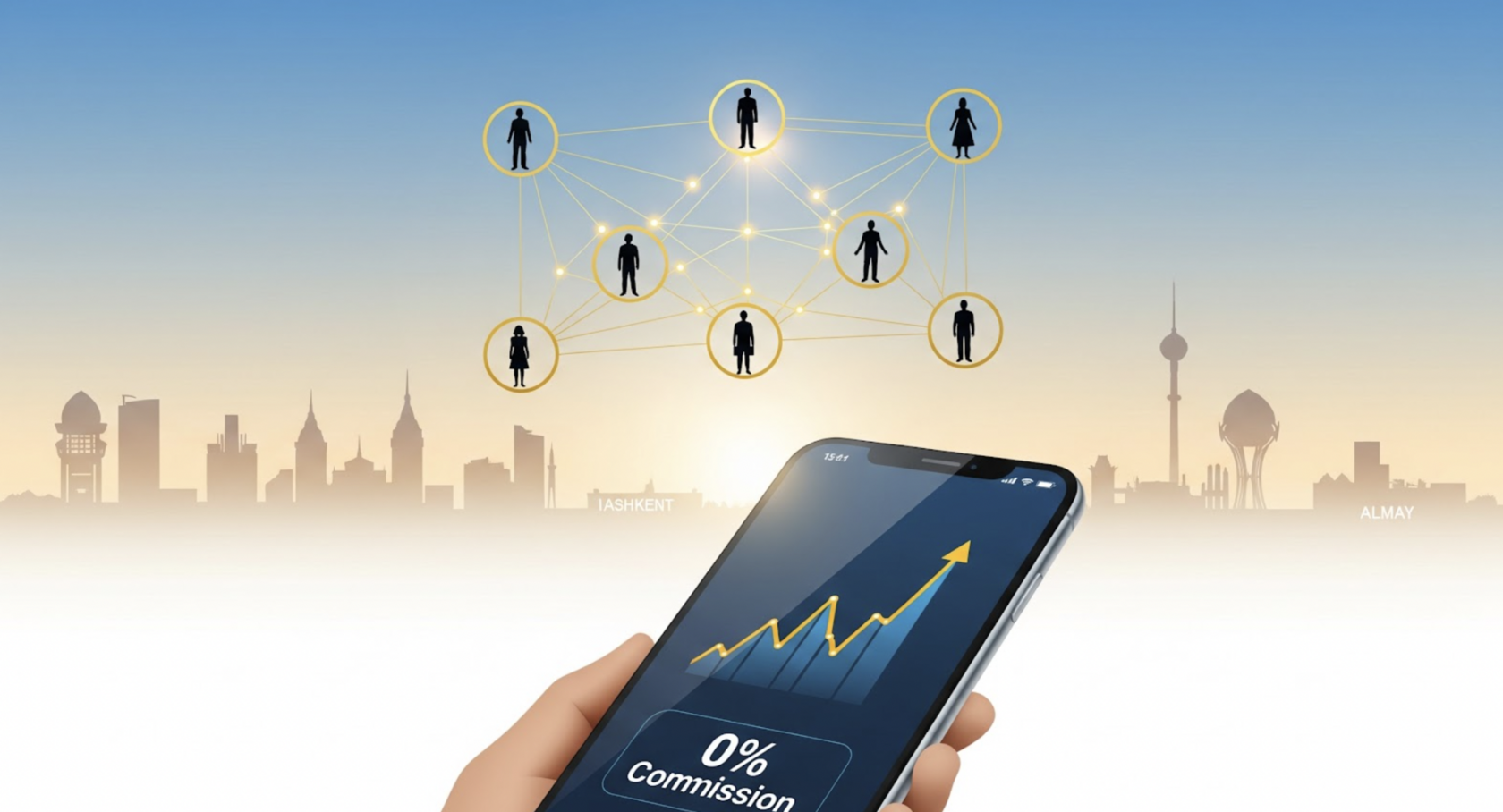
Using Large Action Models (LAMs), platforms can now interact directly with thousands of micro-influencers via Telegram or WhatsApp. This eliminates the need for massive account teams and allows for "Swarm Coordination"—managing 500+ creators simultaneously without human fatigue.
Dynamic Theory-of-Game Bargaining
Modern systems don't just send templates; they negotiate. By utilizing reinforcement learning, AI agents can haggle over placement dates and CPA rates, ensuring the brand gets the best possible margin while maintaining creator motivation.
Establishing the "CFO-Ready" Rationale
Marketing is no longer an island; it must speak the language of the finance department through data-backed justification.
Predictive Media Modeling
Before a single dollar is spent, simulate your campaign. Predictive modeling can forecast the "Golden Ratio" of spend between various creators and platforms based on historical ROI data and regional seasonality.
Neuro-Symbolic Compliance Guardrails
Brand safety is paramount. Using neuro-symbolic AI, companies can mathematically guarantee that creator content adheres to brand-books and local legal regulations (such as Halal codes in Central Asia) before it goes live.
The Infrastructure of Attribution
If you can't measure it, you can't scale it. The 2.0 framework requires a deep, integrated tech stack.
Unified Customer Mapping
Connect your influencer efforts directly to your CRM (Salesforce, HubSpot) or local POS systems. This allows you to track the user journey from a specific Telegram post to a final purchase on platforms like Uzum or Kaspi.
Counterfactual ROI Calculation
Go beyond simple attribution. Use causal AI to answer the question: "What would have happened if we didn't run this influencer campaign?". This provides a definitive proof of incremental growth to stakeholders.
Metrics & ROI: Defining Success in 2.0
Beyond the "Like"
The primary KPI for an affiliate-led influencer network is no longer Engagement Rate; it is ROAS (Return on Ad Spend) and CAC (Customer Acquisition Cost).
Outcome-Based Billing
The ultimate goal is a model where the brand pays only for confirmed sales or leads. This shifts the risk from the brand to the platform and creator, ensuring everyone is aligned on the final performance.
Fluid Budget Management
In a 2.0 ecosystem, your budget should be "liquid." If a specific group of micro-influencers on TikTok is outperforming your "celebrity" face on Instagram, the AI should automatically reallocate funds in real-time to maximize campaign ROAS.
Conclusion: The New Era of Influence
The transition from one-off influencer posts to automated, performance-driven affiliate networks is an evolutionary necessity for the Enterprise CMO. By leveraging AI to handle the strategic research, negotiation, and attribution, marketing teams can stop acting as administrative coordinators and start acting as growth architects. Minora AI facilitates this shift by turning 30 hours of manual strategic planning into a 30-minute automated process, giving you a competitive edge in the global and Central Asian markets.
Ready to grow? Scale your strategic intelligence and turn your influencer collaborations into a predictable sales engine. Get your ready-made marketing strategy and media plan in just 30 minutes.
FAQ
1. How does an influencer affiliate network differ from traditional collaborations?
Traditional models pay flat fees for posts regardless of outcome; affiliate networks pay creators based on performance (CPA/CPS), ensuring a predictable ROI.
2. Can AI really handle negotiations with bloggers?
Yes. Using Large Action Models and reinforcement learning, AI can negotiate terms via Telegram/WhatsApp based on your budget and historical creator performance.
3. Is this model suitable for the Central Asian market?
Absolutely. Minora AI is built with cultural expertise specifically for the region, accounting for local platforms like Telegram and local marketplaces.
4. How long does it take to set up a campaign?
With Minora AI, you can go from a 12-minute brief to a launched strategy, media plan, and presentation in under 30 minutes.
5. How do you prevent influencer fraud in an affiliate model?
We use behavioral biometrics and ML classifiers to detect bot-traffic and click-farms in real-time, ensuring you only pay for human interactions.
6. Can I track offline impact from influencer posts?
Yes, our O2O (Offline-to-Online) bridge uses geo-fencing and DeviceID matching to track if a creator's post led to a physical store visit.
7. Does the AI follow local laws and cultural taboos?
Yes. Our neuro-symbolic engine checks every creative against a "Knowledge Graph" of regional cultural norms and legal regulations before approval.
8. What kind of ROI increase can I expect?
On average, our cross-channel models aim for an ROI increase of at least 20% compared to manual planning.
9. Can I use my own CRM data for targeting?
Yes, Minora AI connects to CRM, POS, and external market data to build a unified customer map for precise creator matching.
10. Do I have to pay high agency commissions?
Minora AI offers a transparent commission that automatically decreases as your budget grows, ensuring more of your budget goes directly to performance.
