

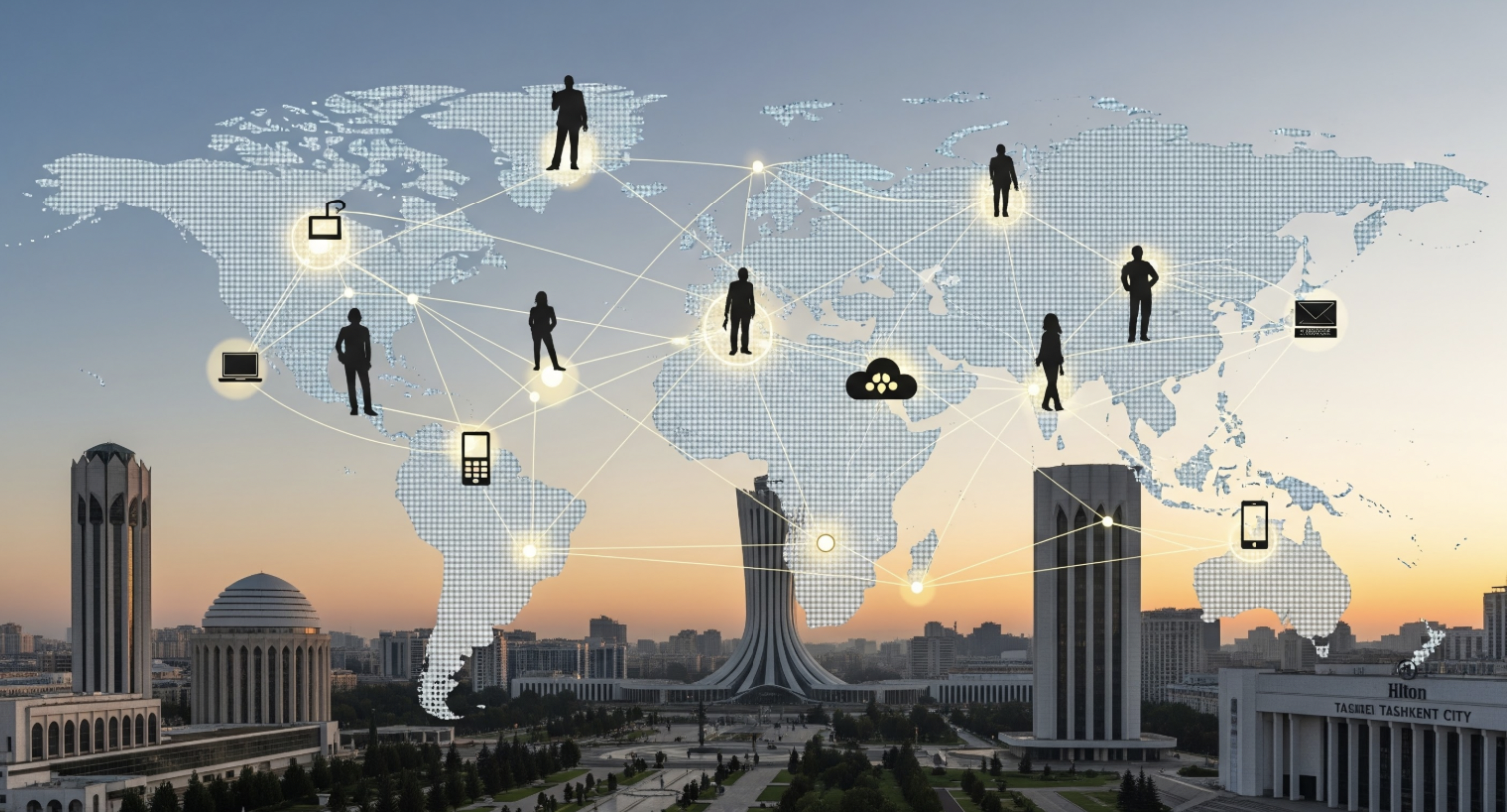
For the Enterprise FMCG CMO, the math of influencer marketing has traditionally been broken. To achieve the "Frequency of Trust" required to move products off supermarket shelves, you need volume—hundreds, if not thousands, of micro-creators. However, the manual outreach, contract negotiation, and content verification of such a "swarm" is physically impossible for small teams. This administrative bottleneck forces brands to settle for a few expensive "mega-stars" who offer broad reach but lack the localized conversion power of a decentralized micro-influencer network.
Context or Strategy
In Central Asia’s fragmented markets, consumer trust is hyper-local and community-driven. In Uzbekistan and Kazakhstan, a single celebrity post is often viewed as "paid media," while a recommendation from a niche Telegram or TikTok creator feels like a peer endorsement. To dominate this landscape, FMCG brands must transition from "Manual Selection" to "Agentic Sourcing," allowing for 10x the market penetration at 1/10th of the operational cost.
Practical Framework: The Agentic Sourcing Engine
To scale to 1,000+ partners, you must replace the "Account Manager" with a "Strategic Orchestrator" powered by Agentic AI.
Neural Discovery and Unified Mapping
Traditional sourcing relies on manual database searches. The 2.0 approach uses deep data ingestion to find the "Hidden Champions" of your niche.
Unified Customer Mapping
Instead of looking at follower counts, the AI ingests data from your CRM and local marketplaces like Uzum or Kaspi. It identifies where your actual buyers spend their digital time, mapping their "Desire-to-Pain" journey across 450+ channels to find creators whose audience overlaps perfectly with your high-LTV customers.
Behavioral Biometrics Auditing
To protect the million-dollar media plan, the AI performs a predictive risk audit. It analyzes the temporal patterns of engagement to filter out bot-farms and "Inorganic Inflation," ensuring that every one of your 1,000 partners provides 100% authentic human reach.
Agentic Negotiation and Onboarding
The physical impossibility of manual outreach is solved through Large Action Models (LAMs) that take responsibility for execution.
Autonomous Communication Agents
Using LAMs, the platform interacts directly with thousands of micro-influencers via their preferred channels—Telegram or WhatsApp. These agents don't just send templates; they engage in "Theory-of-Game" bargaining, negotiating rates based on historical ROI data to ensure your budget is optimized for margin, not just reach.
Automated Legal and Financial Logistics
The administrative burden of 1,000 contracts is eliminated through an integrated fintech layer. The system handles localized contract generation and one-click "Bulk Payouts" in regional currencies, transforming a month of accounting work into a 60-second automated sequence.
Neuro-Symbolic Compliance at Scale
Managing 1,000 creative outputs requires a "Zero-Gaps" safety net to protect brand equity.
Automated Brand-Book Guardrails
Every piece of content is scanned by a neuro-symbolic engine before it goes live. This ensures 100% compliance with your digital brand-book and local cultural codes—such as Halal compliance or regional linguistic nuances—without requiring a human editor for every post.
Dynamic Brief Injection
The engine doesn't send a static PDF. It generates "Smart Briefs" for each creator, automatically adapting the messaging to their specific niche (e.g., emphasizing "family value" for a mommy blogger vs. "convenience" for a student creator), ensuring the FMCG product remains relevant to every micro-segment.
Metrics & ROI: Measuring the Swarm
Efficiency and Scaling Metrics
In an automated model, success is defined by the decoupling of revenue from headcount.
Strategy Synthesis Speed (SSS)
Measure the time from the initial brief to the launch of 1,000 partners. Minora AI reduces this from 2 weeks of manual labor to 30 minutes of strategic synthesis. This speed allows FMCG brands to react to supermarket inventory shifts or seasonal trends in real-time.
Administrative Overhead Compression
Track the ratio of "Management Hours" to "Campaign Volume." A successful agentic transition should allow a single marketing manager to oversee 1,000+ creators, effectively reducing the operational cost-per-influencer by over 90%.
Performance and Sales Metrics
Causal ROI Attribution
Move beyond vanity likes. Use causal AI to map the link between influencer "seeding" and shelf-velocity. By correlating influencer activity with localized POS data or marketplace sales, you can identify which "nodes" in your swarm are the true drivers of incremental growth.
Frequency of Trust Index
Calculate how many times a target consumer in a specific region (e.g., the Fergana Valley or Almaty) sees your product from different trusted peers. In FMCG, a high "Frequency of Trust" is the leading indicator of future market share growth.
Conclusion: From Manual To Sovereign
Scaling to 1,000+ micro-influencers is not a matter of hiring more people; it is a matter of architecting a more intelligent system. By transitioning from manual outreach to an Autonomous Marketing Entity, FMCG CMOs can reclaim their most valuable asset: time. Minora AI enables this by automating the 30-hour strategic research and planning process into 30 minutes, giving you the power to dominate the Central Asian market with a localized, performance-driven influencer swarm that scales as fast as your revenue.
Ready to grow? Stop managing spreadsheets and start leading an autonomous growth engine. Get your ready-made marketing strategy and media plan for 1,000+ creators in just 30 minutes.
FAQ
1. How can AI negotiate better than a human agent?
The AI has access to historical price benchmarks and ROI data for thousands of creators. It uses "Game Theory" logic to find the optimal rate that maximizes your margin while keeping creators motivated.
2. Is it safe to let an AI talk to 1,000 bloggers on my behalf?
Yes. You set the "Hard Constraints" and the "Tone of Voice." The AI operates within these guardrails, ensuring professional and brand-consistent communication at all times.
3. How do you find influencers in specific regions like Samarkand or Shymkent?
Minora AI’s "Unified Customer Map" ingests regional data, allowing us to identify local community leaders in 450+ channels across 5 Central Asian countries.
4. How does the system handle the payment of 1,000 people?
We have an integrated fintech layer (Azma Finance) that allows for one-click bulk payments in local currencies, handling all tax and cross-border complexities autonomously.
5. Can I track the actual sales in supermarkets from these influencers?
Yes, by using localized promo codes and correlating "Seeding" spikes with POS data, we can provide a predictive and historical view of offline impact.
6. Does the AI check the content for cultural taboos?
Absolutely. Our neuro-symbolic engine is specifically trained on the "Cultural Code" of Central Asia, automatically flagging any content that violates regional traditions or laws.
7. How much time does it take to set up such a large campaign?
With Minora AI, the strategy, media plan, and vetted list of partners are ready in 30 minutes. The automated outreach can be completed within 48 hours.
8. What happens if a micro-influencer has fake followers?
Our behavioral biometrics analysis detects "Synthetic Inflation" in the vetting stage, ensuring you only pay for reach to real, human audiences.
9. Can I use this for global FMCG brands entering the region?
Yes. Minora AI is the bridge for global brands, providing the local cultural expertise and autonomous execution needed to win in Central Asia without a large local office.
10. What is the minimum budget for an automated campaign?
Our system is built for Enterprise scale, but its efficiency allows it to be effective for any campaign looking to manage 50+ creators simultaneously with high ROI.
