

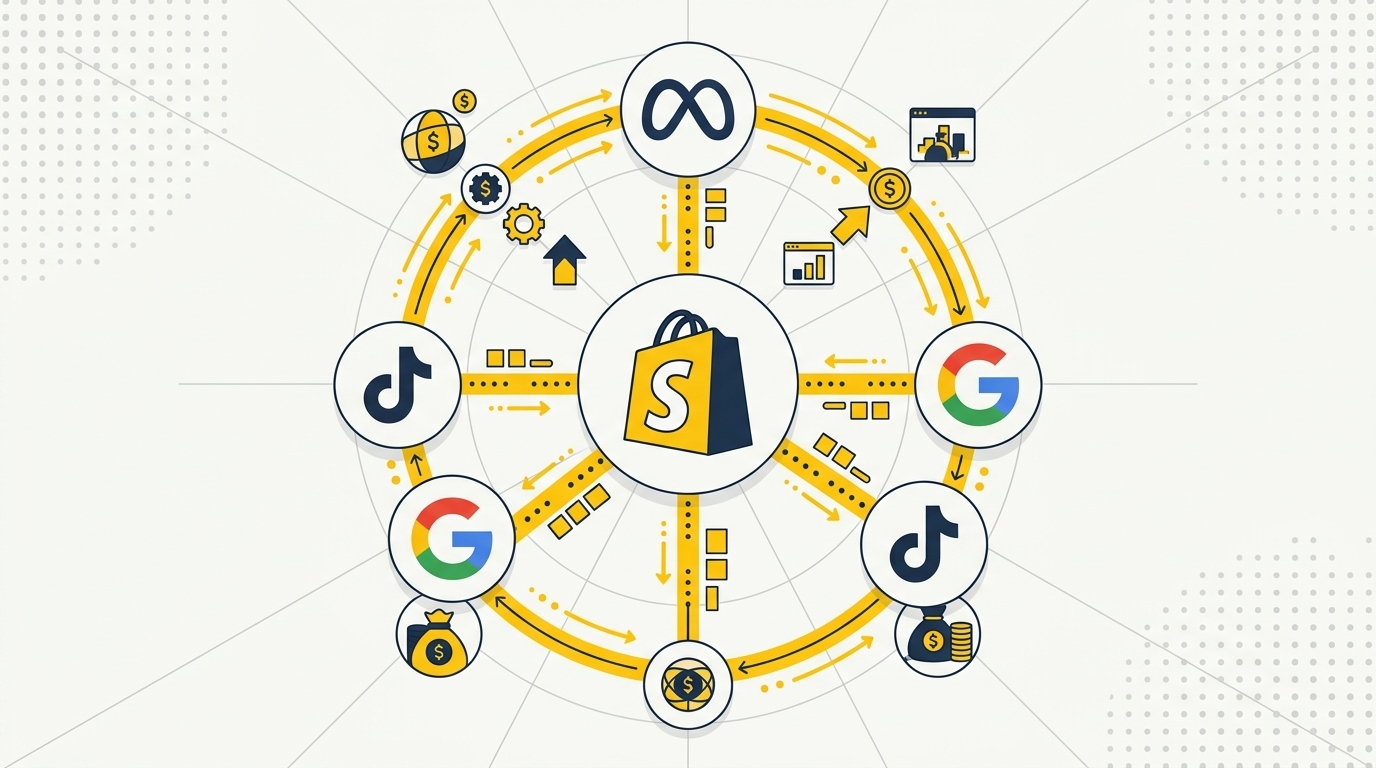
D2C brands are bleeding 28% of their ad spend into algorithmic waste. The problem isn’t the creative. The problem is manual execution in an autonomous marketplace.
In early 2026, the market shifted from generative experimentation to agentic execution. We moved past prompting isolated chatbots. Organizations are building predictive architectures that allocate dollars automatically. I’ve seen brands cut their blended CAC from $45 to $28 in 14 days by abandoning siloed media buying for autonomous orchestration.
If you are still managing Meta and Google budgets in separate dashboards, you are already behind. The vocabulary of growth has fundamentally changed. Here is what brands getting this right understand about the new technological infrastructure.
The Pragmatic Reset: Why Agentic Execution Matters Now
Enterprise adoption of AI in marketing hit 94% this year. But output volume isn’t scaling revenue. Brands hit a quality ceiling between month 12 and 15 of AI deployment. Flooding the internet with identical content doesn’t lower acquisition costs.
The most severe disruption in two decades is forcing a reset. We are transitioning toward repeatable, infrastructural implementation. Strategy and execution now occur in parallel. Performance signals inform live iteration.
“The brands that will own 2026 aren’t the ones with the biggest budgets. They’re the ones who stopped optimizing channels in silos and started letting data move money.”
The Tactical Core: Architecting the Autonomous Growth Engine
Agentic Commerce vs. Generative Tools
Agentic AI operates proactively. Generative tools act as sophisticated calculators requiring constant human prompts. Agentic systems are autonomous frameworks engineered to pursue objectives and self-correct. They execute multi-step workflows. A wellness brand spending $120K/month deployed agentic orchestration to connect Shopify revenue directly to ad allocation. Their LTV:CAC ratio increased by 42%. Stop using AI to write emails. Start using it to make structural financial decisions.
Marketing Operating System (Marketing OS)
Fragmented tools cause attribution blindness. A Marketing OS consolidates data warehousing, intelligence, and cross-channel delivery into a singular environment. Autonomous optimization replaces analytical headcount. The AI agents native to the Marketing OS construct and execute the workflows internally. Minora AI operates as a multi-agent system that predicts CPA before a campaign launches.
Model Context Protocol (MCP) and A2A
Interoperability dictates agentic success. MCP is the universal integration layer. It allows agents to securely extract live inventory data or query historical CRM databases. Agent-to-Agent (A2A) protocol facilitates direct peer-to-peer coordination between intelligent entities. Complex, multi-agent workflows require both. Build a layered architecture.
Predictive Value-Based Bidding (VBB)
Meta’s automated campaigns and Google’s algorithms are shifting toward long-term profitability. Predictive VBB scales bid aggressiveness based on the anticipated economic impact of the user. We calculate custom predictive LTV scores using proprietary first-party data. These attributes sync via Conversions APIs. Media buying is now a proactive investment.
Synthetic Personas and Contextual Synthesis
Synthetic personas are sophisticated, AI-generated behavioral archetypes. They simulate how a specific segment reacts to stimuli. Rather than waiting weeks for qualitative research, planners feed concepts to language models. We pressure-test messaging against thousands of synthetic representatives simultaneously. Combine this with contextual synthesis. Adjust pricing and visual merchandising within milliseconds based on live environmental variables.
The Protocol Layer: Comparing Integration Standards
Frequently Asked Questions About 2026 AI Terminology
1) What is Generative Engine Optimization (GEO)?
Generative Engine Optimization is the practice of structuring content so AI answer engines explicitly cite a brand. The primary metric is the Mention Rate across AI-generated responses. You optimize for algorithmic fan-out queries instead of static blue links.
2) How does Answer Engine Optimization (AEO) differ from GEO?
Answer Engine Optimization focuses strictly on the meticulous technical structuring of on-page content. You format information so machine parsers effortlessly extract it as standalone facts. This requires rigorous content chunking and advanced Schema markup.
3) Why use synthetic personas instead of traditional segmentation?
Synthetic personas function as fully interactive, queryable entities. Traditional segmentation defines who to target based on static demographic attributes. You deploy synthetic personas as persistent digital focus groups to test risky messaging architectures before committing media budgets.
4) What is the role of a human marketer in an agentic system?
Human practitioners transition into governance roles. You serve as a strategic architect who defines parameters and acts as a final validation check. The autonomous agents execute the vast majority of operational workflows. Minora AI operates with this exact philosophy. You set the target CAC, and the multi-agent system dynamically reallocates budget 24/7.
5) Moving From Siloed Automation to Systemic Intelligence
The market saturation of basic generative content marks the end of isolated tool adoption. The future belongs to organizations that deploy cohesive agentic infrastructure. The transition from reactive media buying to predictive, value-based autonomous orchestration is mandatory for D2C survival. Master the terminology. Rebuild your digital architecture. Stop trying to out-calculate the machine manually.
