


Your performance team runs a campaign that returns $4 for every $1 spent. Everyone celebrates. Then the CFO pulls up Q3 financials and the marketing line is hemorrhaging money. Nobody's lying. They're just measuring different things — and the gap between those two measurements is where marketing budgets go to die. If you can't translate campaign ROAS into business ROI, you will keep losing the budget conversation. This article explains how to speak both languages — and how to stop needing a translator at all.
Why ROAS and ROI Measure Completely Different Problems
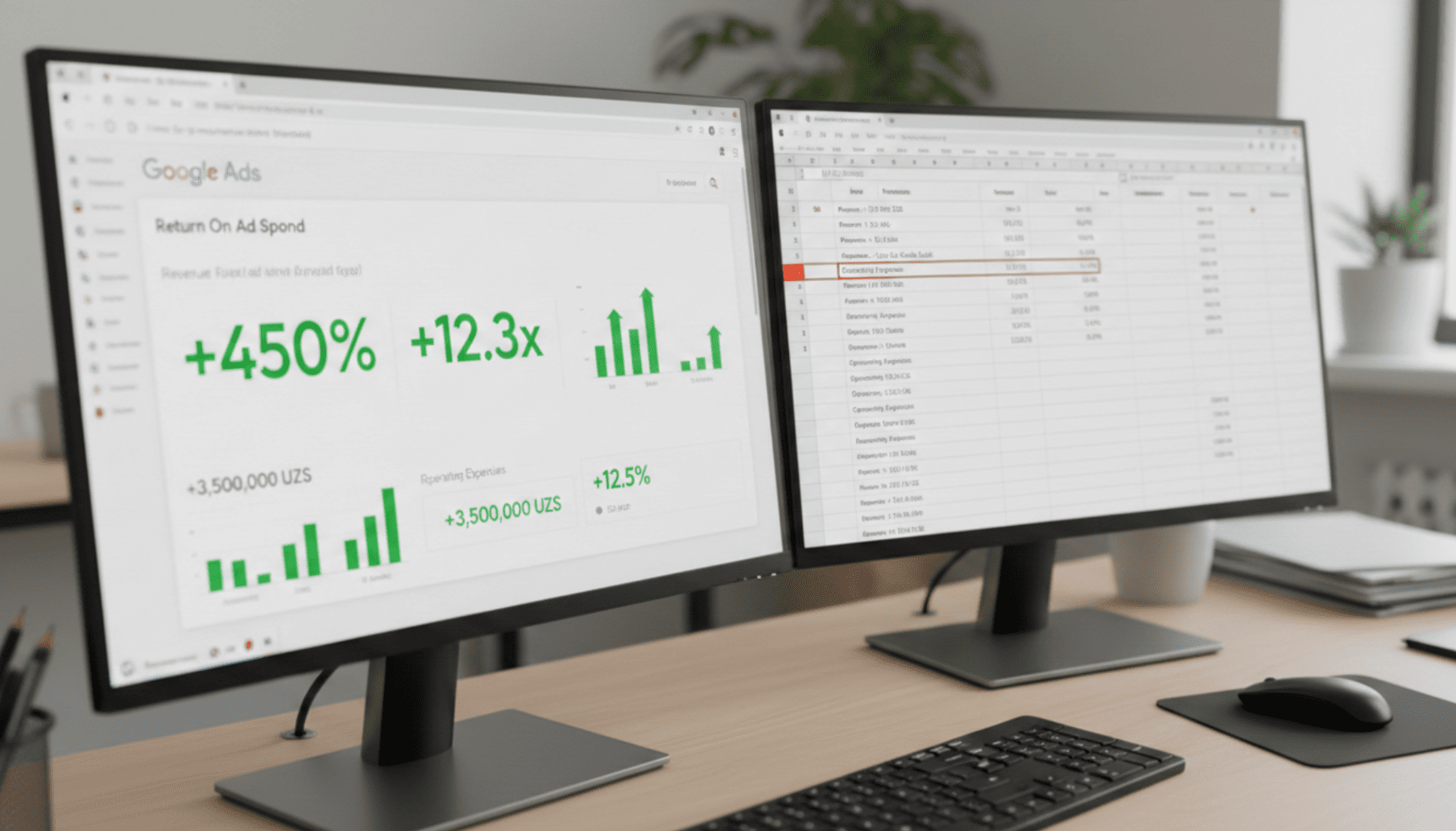
ROAS and ROI are not interchangeable. Most marketing teams treat them as variations of the same concept. They aren't. ROAS measures how much revenue a specific ad channel generated relative to what you spent on it. ROI measures whether the business made money after all costs are accounted for. You can have a ROAS of 6x and still lose money on a campaign — and it happens more often than finance teams want to admit.
The confusion is structural. Performance marketers live inside ad platforms where ROAS is the native language. Google Ads, Meta, and every DSP reports back in ROAS. CFOs live inside P&L statements where cost of goods, fulfillment, returns, and overhead are all accounted for. A ROAS of 4x on a product with 30% gross margin is not a win. It's roughly break-even before you count operating costs.
The math is simple. If your product costs $60 to make and sell and retails at $100, a 4x ROAS on $10,000 ad spend generates $40,000 in revenue. After cost of goods ($24,000), you have $16,000 gross profit. Subtract the $10,000 ad spend and you net $6,000. That's a 60% marketing ROI on the campaign — not 400%. ROAS and marketing ROI are not close to the same number, and organizations that report only ROAS to the board are presenting an incomplete picture.
Not sure which metric your board actually cares about? Book a strategy call with Minora AI — we work with enterprise marketing teams across Central Asia and global markets to build reporting that makes sense to both CMOs and CFOs.
A Framework for Translating Between ROAS and ROI
The disconnect exists because ROAS is a channel metric and ROI is a business metric. The solution isn't to stop reporting ROAS — it's to stop treating ROAS as the final word. Here's how to build a bridge between the two.
Step 1 — Establish Your Minimum Viable ROAS
Calculate Your Gross Margin ROAS Threshold
Before you report any ROAS figure to leadership, calculate the ROAS you need just to break even. The formula: 1 ÷ gross margin %. For a 25% margin business, you need a 4x ROAS just to cover cost of goods. Anything below that and the marketing channel is losing money regardless of what the ad platform dashboard shows.
Account for Blended vs. Channel-Level ROAS
Platform-reported ROAS almost always overstates performance because it counts revenue that would have happened anyway — organic traffic, returning customers, branded searches. Blended ROAS — total revenue divided by total ad spend — is a more honest number. It's usually lower than channel ROAS, and that's fine. It's what you actually earned.
Step 2 — Connect Campaign Data to Business Outcomes
Map Channel CPA to Customer Lifetime Value
A $50 cost per acquisition looks expensive until you know the customer spends $400 over two years. Without LTV data attached to channel-level CPA, you're optimizing for the wrong thing. Marketing ROI improves when you stop minimizing CPA and start maximizing LTV-adjusted CPA.
Use Multi-Touch Attribution to Assign Credit Correctly
Last-click attribution systematically inflates the ROAS of bottom-funnel channels (branded search, retargeting) and deflates the ROI contribution of awareness channels. Enterprise teams running campaigns across 100+ touchpoints need data-driven attribution — not because it's fashionable, but because the media budget allocation AI makes decisions based on the attribution model you give it. Garbage in, misallocated budget out.
Minora AI's Strategy Personalization Agent addresses exactly this gap. Before a campaign launches, it forecasts Reach, CPA, and ROI simultaneously — not just ROAS. The model is trained on $30M+ in historical ad spend, which means it has seen what real post-margin returns look like across verticals and regions, including Central Asian markets where channel dynamics differ significantly from Western benchmarks.
What CMOs Should Actually Report to the CFO
The CFO doesn't need your ROAS. They need to know three things: did marketing spend generate net positive returns, how confident are you in that attribution, and what would happen to revenue if the budget were cut by 30%. If you can't answer those questions with data, the budget conversation will always go badly.
KPIs to Track
Marketing-Attributed Revenue (Net of COGS)
This is the number the CFO actually cares about. Not gross revenue driven by ads — revenue minus cost of goods, returns, and fulfillment. When you report this figure at the channel level, you've translated ROAS into something a P&L reader can use. For B2B marketing ROI benchmarks in 2026, the standard expectation from most enterprise CFOs is a minimum 3:1 return on marketing investment when measured this way.
Incremental Revenue vs. Baseline
Run holdout tests on key channels to measure true incrementality. How much revenue would have happened without the campaign? The delta is your real number. Incremental ROAS is almost always lower than platform-reported ROAS — sometimes by 40-60%. It's also the one metric that stands up to scrutiny.
Marketing Efficiency Ratio (MER)
Total revenue divided by total marketing spend. No attribution games, no last-click distortions. MER gives you a blended picture of marketing's contribution to the business. It's not perfect — brand spend takes months to show up in revenue — but it's a number a CFO can cross-reference against the income statement.
How Minora AI Reports on These Metrics
Minora AI's Optimization Agent monitors 450+ channels simultaneously and reallocates budget to top performers in real time — not at the end of the month when it's too late to fix bad spending. The Executive Performance Dashboard shows ROI trend analysis with predictive forecasting, so the CMO can walk into a CFO meeting with projected ROI, not just current ROAS. That's the difference between justifying what you spent and proving what you'll deliver. It removes what the product deck calls the "Manual Tax" — the hours wasted waiting for end-of-month reports to confirm what the data already showed two weeks earlier.
Conclusion
The ROAS vs ROI debate isn't a measurement problem — it's a communication problem that costs marketing teams budget every year. ROAS is a useful tactical signal. Marketing ROI is what actually determines whether the CMO keeps their budget. The organizations that close this gap are the ones that connect ad platform data to business outcomes before the CFO meeting, not during it. Minora AI was built specifically to run this translation — forecasting CPA, ROAS, and ROI before spend is committed, then reallocating in real time as the campaign runs. Stop defending a ROAS number your CFO can't use. Start reporting the one they care about.
Ready to report marketing ROI your CFO will actually trust? Minora AI forecasts campaign ROI before you spend a dollar and reallocates budget 24/7 so both your ROAS and your net returns move in the right direction. Stop translating between marketing and finance — run on a platform that speaks both languages.
FAQ
Q1: What is the difference between ROAS and ROI in marketing? A: ROAS (Return on Ad Spend) measures how much revenue a specific campaign generates per dollar spent on ads — it doesn't account for product costs, fulfillment, or overhead. ROI measures net profit relative to total investment. A 4x ROAS on a low-margin product can still produce negative ROI, which is why reporting only ROAS to the CFO routinely creates budget conflicts.
Q2: What ROAS do I need to actually be profitable? A: Calculate your break-even ROAS by dividing 1 by your gross margin percentage. If your gross margin is 25%, you need a 4x ROAS just to cover cost of goods — before marketing spend is counted. Anything above that threshold contributes to actual profit; anything below means the channel is costing you money regardless of how the ad platform frames it.
Q3: Why does platform-reported ROAS differ from real marketing ROI? A: Ad platforms attribute revenue to the last click or the assisted click within their ecosystem, which inflates their contribution. They also count revenue from customers who would have converted without the ad (organic, direct). Blended ROAS — total revenue over total ad spend — and incremental ROAS tests give you a more honest picture of what your media budget actually produced.
Q4: How should a CMO present marketing ROI to the CFO? A: Use marketing-attributed revenue net of COGS, not gross revenue. Report your Marketing Efficiency Ratio (total revenue ÷ total marketing spend) alongside channel-level CPA. If you have holdout test data showing incremental revenue, lead with that — it's the number that holds up under scrutiny and directly answers whether the budget is generating positive returns.
Q5: What is blended ROAS and why does it matter? A: Blended ROAS divides your total revenue by your total ad spend across all channels, rather than isolating individual platform ROAS. It eliminates the double-counting and halo effects that inflate single-channel ROAS. For CMOs managing multi-channel ad budget optimization across 10+ platforms, blended ROAS is a more reliable anchor for CFO reporting.
Q6: Can AI help bridge the gap between ROAS and marketing ROI reporting? A: Yes, but only if the AI has access to both campaign data and business outcome data. Minora AI's Strategy Personalization Agent forecasts Reach, CPA, and ROI simultaneously before a campaign launches, using a model trained on $30M+ in historical ad spend. That means you're not just optimizing for ROAS — you're optimizing for business returns from the start.
Q7: What is a good marketing ROI benchmark for B2B enterprise in 2026? A: Most enterprise CFOs expect a minimum 3:1 marketing ROI when measured against net revenue contribution — meaning $3 of net margin-adjusted revenue for every $1 in marketing spend. Cost per lead in B2B varies enormously by industry and buying committee size, but B2B marketing ROI benchmarks in 2026 generally expect payback within 12-18 months for demand generation investment.
Q8: How does real-time budget reallocation improve both ROAS and ROI? A: Frozen budgets — money locked in underperforming channels while you wait for end-of-month reports — are one of the biggest drivers of wasted marketing spend. Minora AI's Optimization Agent monitors 450+ channels and reallocates budget to top performers continuously, which means poor ROAS channels stop burning money within hours rather than weeks. The result is higher blended ROAS and better overall marketing ROI without increasing total budget.
Q9: Why do performance marketers and CFOs fight about marketing budgets? A: Because they're reporting from different data layers. Performance marketers report ROAS from ad platforms; CFOs evaluate marketing against net profit from the P&L. Until those two data layers are connected — with gross margin applied to channel revenue, attribution models that account for incrementality, and predictive ROI forecasting — the conversation will keep producing conflict instead of alignment.
Q10: Is ROAS a useful metric or should CMOs stop reporting it? A: ROAS is useful as a tactical optimization signal inside a campaign — it tells you which ad sets and channels are generating revenue most efficiently. The mistake is treating ROAS as a business performance metric. For CMOs, ROAS should stay in the campaign dashboard. What goes to the board is marketing-attributed net revenue, marketing ROI, and incremental return on ad spend waste reduction. ROAS is an input to that story, not the headline.
